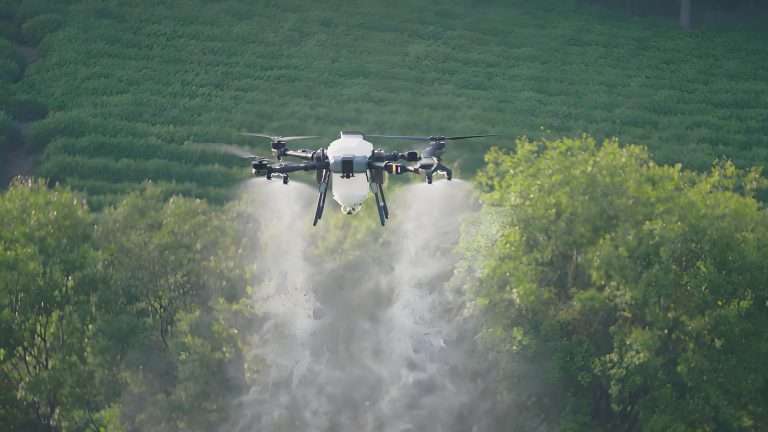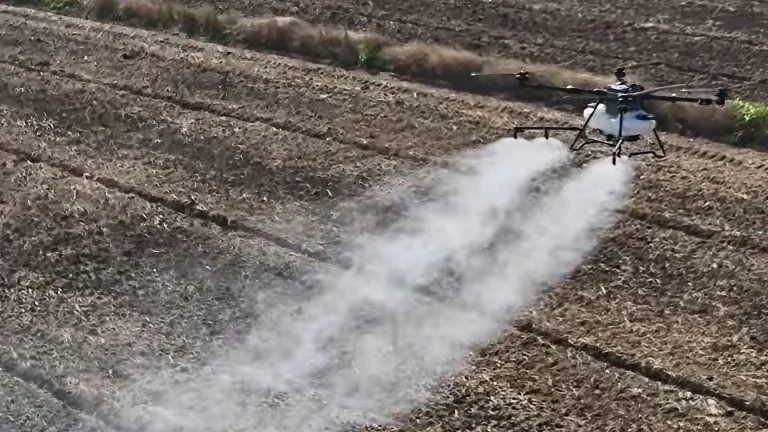
Wheat Pre-Emergence Weed Control with the A80: A Practical Drone Case Study
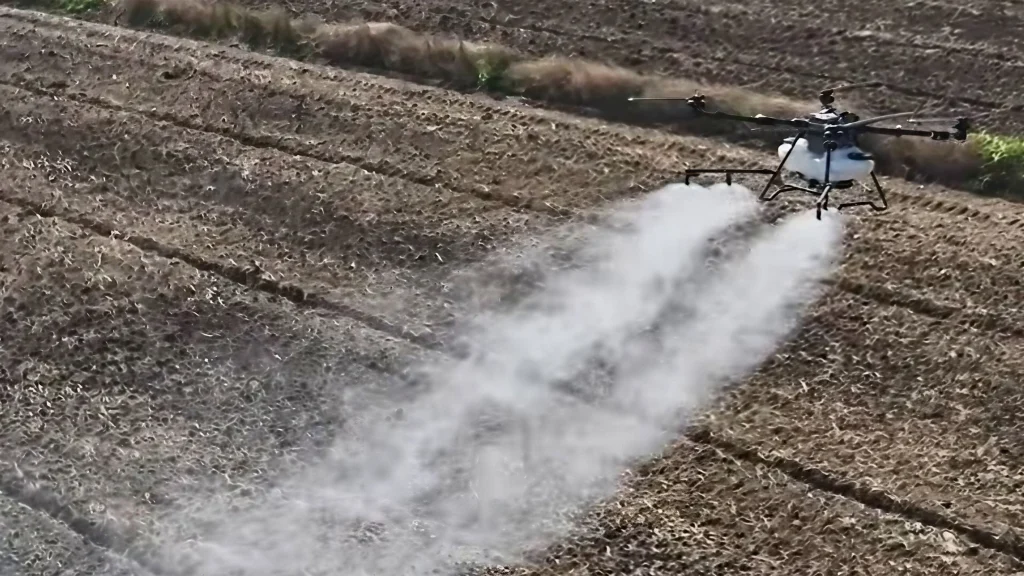
Executive summary
Wheat pre-emergence weed control is often decided by timing before it is decided by chemistry. Once the field is drilled, the spray window can tighten quickly. A small weather shift can turn ground access into the main operational bottleneck, especially when the soil surface is soft or wet.
For growers and service teams evaluating a wheat weed control drone, the commercial question is simple: can the platform help you reach the field on time and apply with enough consistency to justify deployment? In this scenario, the A80 fits because its spray module is built around execution, not just headline capacity: a 75 L tank, up to 40 L/min max spray flow rate, 30–500 μm adjustable droplets, four rear-mounted centrifugal nozzles, dual-channel metering pumps, dynamic circulation and mixing, and spraying accuracy deviation within 5%.
That is not a promise of guaranteed control or yield gain. It is a practical case for protecting a short spray window and aiming for more uniform herbicide coverage when wet field access makes conventional timing harder to hold.
The agronomic challenge: why pre-emergence timing matters in wheat
Pre-emergence herbicide application in wheat is fundamentally a placement job. The objective is to put a consistent treated pattern where it needs to be before weeds establish and before timing starts slipping. If that pattern is late, patchy, or inconsistent from one part of the field to another, early-stage weed control becomes harder to stabilize.
This is why spray timing in wheat matters so much. In many situations, the program depends less on spraying something quickly and more on laying down a controlled soil-surface application. Droplet behavior, output consistency, and spray-liquid stability all influence whether the field receives a repeatable result or a visibly uneven one.
The operational problem is that wheat fields rarely wait for the perfect day. After drilling, a rainfall event or marginal soil condition can compress the window. At that point, the limiting factor is not always product choice. It is whether the team can still execute on time.
Why ground rigs and manual spraying often miss the window
Ground rigs remain highly effective when the field is trafficable and the job can be completed on schedule. This is not an argument against conventional equipment. It is an argument for the cases where access breaks the plan.
When wet field access becomes the issue, a grower may face a difficult choice: wait for firmer soil and risk missing the preferred timing, or force entry and accept the downsides of putting wheels into a field that is not ready. Either way, the job can drift away from the ideal pre-emergence window.
Manual spraying solves some access problems, but it creates others. Pace slows. Refill rhythm becomes more variable. Coverage can depend too heavily on operator movement and field conditions. For commercial wheat operations, that variation is exactly what teams are trying to reduce.
That is where aerial herbicide application starts to make sense: not as a universal replacement, but as a way to protect timing when field entry is the real constraint.
| Challenge | Conventional limitation | How A80 addresses it |
|---|---|---|
| Short spray window after drilling | Ground entry may be delayed by soft or wet soil | 75 L tank and up to 40 L/min help teams maintain mission tempo once the window opens |
| Need for more uniform herbicide coverage | Manual pace and pass consistency can vary | 30–500 μm adjustable droplets, up to 10 m max spray width, and four rear-mounted centrifugal nozzles support more controlled setup |
| Spray mix stability across refill cycles | Settling or separation can change the liquid profile through the job | Dynamic circulation and mixing help keep the spray liquid more consistent in the tank |
| Repeatable output | Inconsistent delivery can create heavier and lighter zones | Dual-channel metering pumps and within 5% spraying accuracy deviation support steadier delivery |
| Operator awareness at field edges or in low light | Visibility and obstacle awareness become harder as conditions tighten | LiDAR + mmWave phased-array radar, 360° LiDAR, low-light full-color FPV, 80W bidirectional lights, and a 7-inch HD remote controller support better field awareness |
Why the A80 fits this job
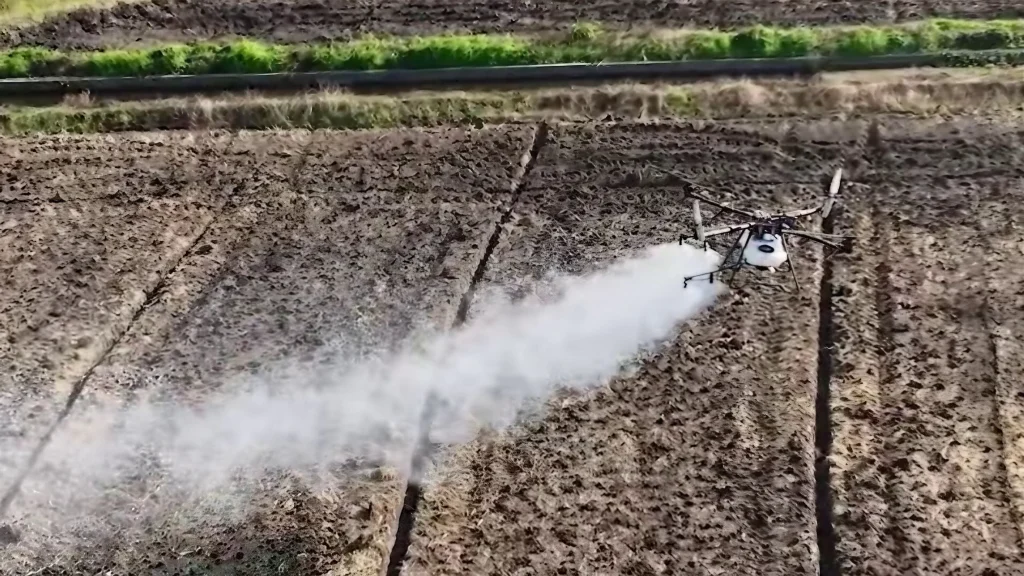
The A80 is a heavy-lift, modular agricultural drone platform. For this wheat scenario, the spraying module is the relevant configuration.
It is built for the most time-sensitive part of the job
A 75 L spray tank matters because refill rhythm shapes the whole operation. In a short window, crews do not just need capacity. They need fewer interruptions to the flow of the job. The A80’s up to 40 L/min max spray flow rate helps the platform match the urgency of narrow pre-emergence work without turning every refill into a bottleneck.
It gives the operator useful droplet control
Droplet control matters because wheat pre-emergence weed control is not just about moving liquid. It is about setting up an application that suits the field condition and the spray objective. The A80 supports 30–500 μm adjustable droplets, which gives operators a meaningful setup range instead of one default spray behavior. Combined with four rear-mounted centrifugal nozzles and up to 10 m max spray width, that gives service teams a stronger basis for pursuing more uniform herbicide coverage.
It helps keep the spray liquid more stable through the task
Pre-emergence work can lose quality when the first tank and the last tank do not behave the same way. The A80 addresses that risk with dynamic circulation and mixing, backed by dual-channel metering pumps. EAUAV also specifies spraying accuracy deviation within 5%, which matters when the team is trying to reduce unnecessary variation from refill to refill.
It supports a more credible field workflow, not just a bigger machine
When field access is already difficult, situational awareness matters even more. The A80 combines LiDAR + mmWave phased-array radar, 360° LiDAR, 850,000 pts/sec point clouds, low-light full-color FPV, 80W bidirectional lights, and a 7-inch HD remote controller. These features do not replace planning or pilot judgment, but they make the platform more credible for real field edges, lower-visibility periods, and operational pressure.
A realistic field workflow
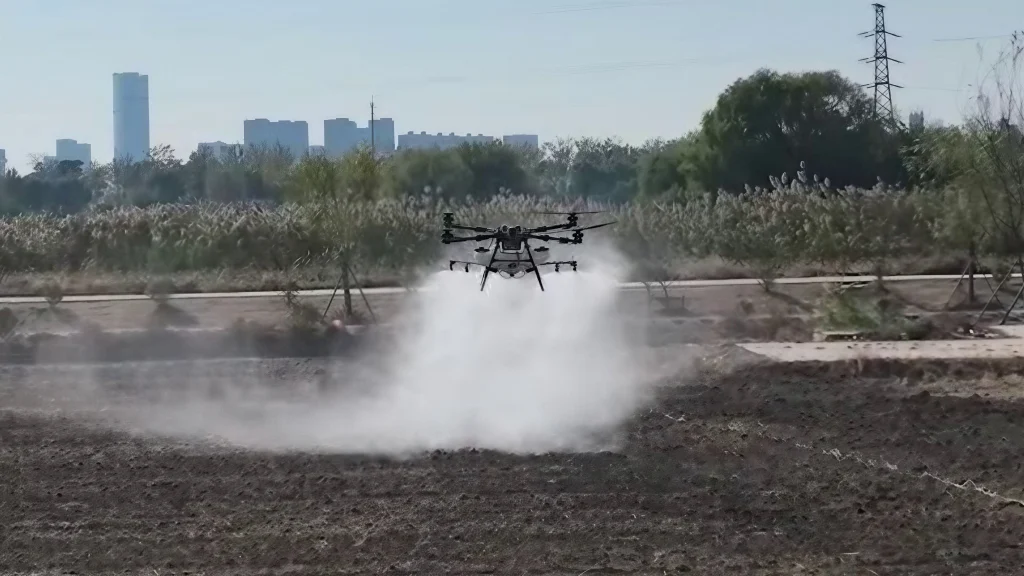
Field condition
Start with a go or no-go review that is operational, not theoretical. Check soil surface condition, headlands, standing water, refill access, shelterbelts, wires, poles, and any irregular field edges.
If the main reason for delay is that a wheeled rig cannot enter the field on time, this is exactly the kind of job where a drone workflow deserves serious consideration.
Product mixing
For pre-emergence herbicide application in wheat, liquid stability matters. Before the first load, the team should confirm the water source, mixing order, compatibility, and nurse-tank process. The A80’s dynamic circulation and mixing help keep the solution more consistent once loaded, but the platform cannot fix poor ground-side discipline.
A professional loading workflow means every refill should resemble the first refill, not drift away from it.
Route setup
Set field boundaries, no-spray zones, refill points, landing areas, and contingency actions before launch. Then choose droplet settings deliberately rather than carrying one setup into every block. Because the A80 gives the team 30–500 μm adjustable droplets and a centrifugal-nozzle layout, route setup is part of the agronomic decision, not just the pilot checklist.
This is also the right moment to brief the operator on edge hazards, visibility conditions, and refill logistics using the controller and sensing tools.
Application window
Once the window opens, steadiness is more valuable than speed for its own sake. The 75 L tank and up to 40 L/min max spray flow rate help the team maintain a working rhythm, but execution still depends on clearly defined roles: pilot, refill or loading support, and job oversight.
Power planning should also be settled before the first sortie. The A80 uses a 34Ah 18S high-voltage smart battery and supports three charging options: AC 12 kW, DC 12 kW, and integrated generator DC 11.5 kW. That does not tell you charge time or field duration by itself, but it does mean the team can build a deliberate power strategy instead of improvising one.
Post-job check
A professional post-job check should capture more than “task completed.” Review route completion, overlap or miss concerns, the droplet setting used, refill consistency, weather notes, and early follow-up observations.
What outcomes should be measured in a real deployment
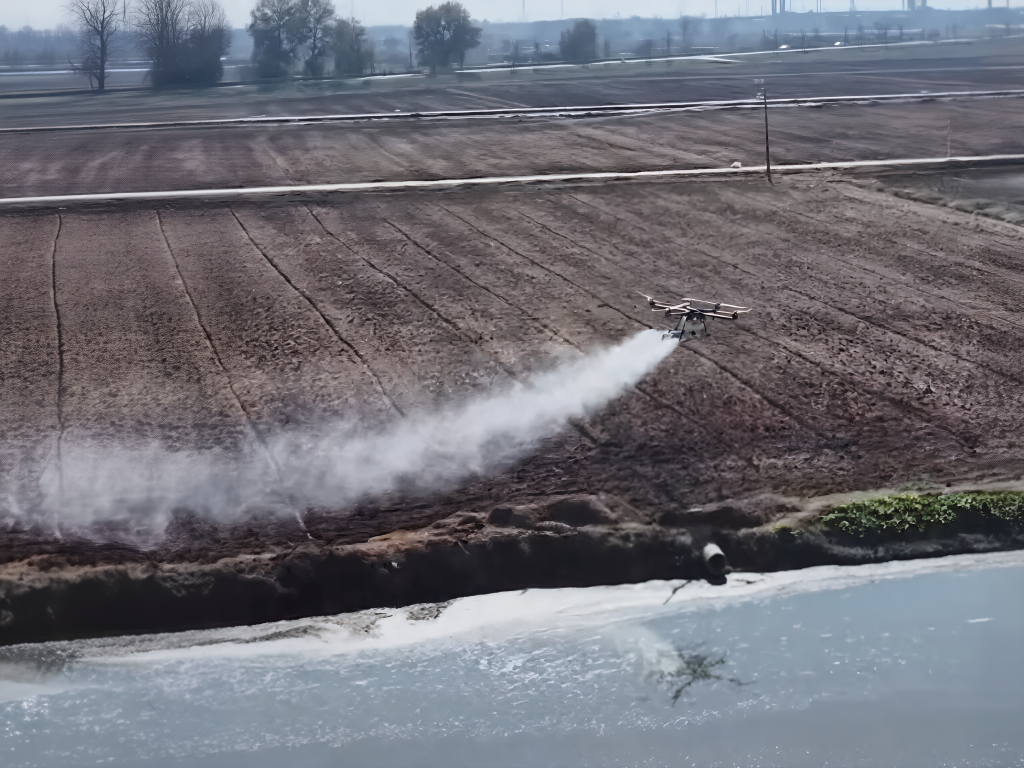
A credible case study should measure execution quality before it tries to talk about business impact. In a real A80 deployment for wheat pre-emergence weed control, the most useful metrics are:
- Completion within the target pre-emergence spray window
- Number of blocks delayed because ground access was not feasible
- Refill-to-refill consistency in liquid preparation and output settings
- Overlap and miss observations from route review
- Early weed escape pattern by zone, especially edges and headlands
- Crop safety observations after emergence and subsequent weather events
- Team workflow stability across loading, flight, handover, and job logging
That is the right order of proof. First validate whether the workflow is stable. Then assess whether the agronomic outcome is consistent enough to scale.
When A80 is the right fit — and when it may not be
The A80 is the right fit when the real problem is short timing, wet field access, and the need for more repeatable aerial herbicide application in wheat. It makes the most sense for commercial growers, farm managers, and ag service providers who need to protect a narrow window and want a more deliberate spraying workflow rather than a last-minute workaround.
It may not be the right fit when ground equipment can enter on time with no meaningful access penalty, or when the job is too small or too infrequent to justify a dedicated workflow. It is also not a substitute for field validation. The A80 should be assessed as a professional tool for improving execution quality and timing discipline, not as a shortcut around agronomy.
Conclusion
If you are evaluating the A80 for wheat pre-emergence weed control, the right next step is a technical discussion around your real workflow: field access constraints, loading process, droplet setup logic, and validation plan. Request a quote, schedule a demo, or open a distributor discussion with EAUAV based on your wheat program.
FAQs
Can drones be used for pre-emergence herbicide spraying in wheat?
- Yes, they can be used when the objective is timely, controlled aerial application and field access is the main constraint. The key question is not only whether the drone can spray, but whether the workflow, droplet setting, and mixing discipline match the wheat program.
How does droplet control affect wheat weed control?
- In pre-emergence work, droplet control influences how evenly the treated pattern is laid on the soil surface. Better droplet selection helps teams aim for more uniform herbicide coverage instead of relying on one default spray behavior in every condition.
Is an agricultural drone useful when the field is hard to enter?
- Often, yes. Wet field access is one of the clearest reasons to evaluate a wheat weed control drone, because the operational risk may come from delayed entry rather than from spray capacity alone.
Why does spray-mix stability matter in pre-emergence herbicide application in wheat?
- Because concentration drift across refill cycles can undermine consistency. Dynamic circulation and mixing help, but crews still need disciplined loading and mixing procedures on the ground.
What information should growers validate before scaling up?
- Validate field access assumptions, product compatibility, water source quality, droplet setting, refill workflow, route review, and early weed escape observations across different blocks. Use placeholders first, then replace them with measured field data.
Is the A80 always the right choice for wheat pre-emergence weed control?
- No. If a ground rig can enter on time and the application can be completed without meaningful access penalties, conventional methods may still be the better fit. The A80 matters most when timing, wet ground, and repeatable spray execution are the limiting issues.
Subscribe our YouTube: https://www.youtube.com/
Like us on Facebook: https://www.facebook.com/